
Damp Proofing and Plastering Services in Sunderland
Damp proofing, new damp proofing courses and membranes, plastering and skimming, dry lining, and K Rend and other rendering, for homes and businesses in Sunderland and the surrounding area.
Damp proofing in Sunderland
- Damp proofing
- Damp proof courses
- Membranes
- Plastering
- Dry lining
- K Rend
A damp proofing company that plasters and renders too
Damp proofing and plastering go hand in hand. Curing a damp wall nearly always means stripping out the spoilt plaster and putting new plaster back, and damp coming through an outside wall is often down to old render that has cracked. As plasterers and renderers, and fully approved Wykamol damp proofing installers, we can do every part of the job ourselves.
Each section below explains what the work involves and what to look out for. If your job is not listed, or you are not sure what it needs, call 07436 808254 or send the form and describe it. Quotes are free and all our work is guaranteed.
Damp proofing in Sunderland
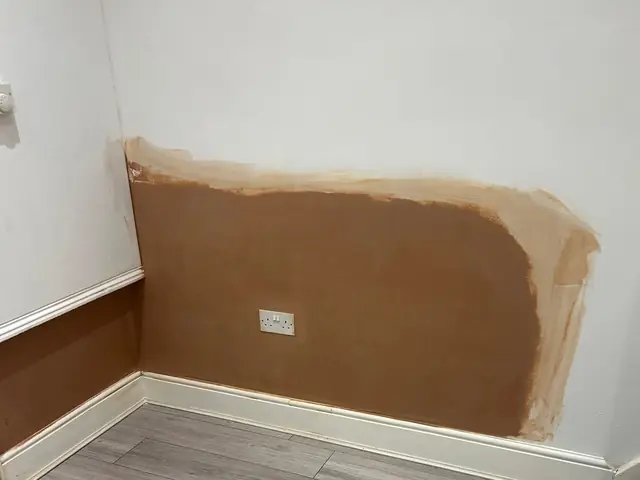
Damp in a wall shows itself in the same few ways: a tide mark along the bottom of the wall, paint and wallpaper lifting, plaster that crumbles or sounds hollow, skirting boards going soft, and a musty smell that never quite clears. Plenty of the older terraced houses around Sunderland were built with no damp proof course at all, or with one that gave up long ago.
Damp proofing starts with finding where the moisture is coming from, because the cure depends on the cause. Rising damp needs a new damp proof course. A wall with ground against it, or one full of salts, may need a membrane. Damp coming through from outside, through failed pointing or cracked render, needs putting right on the outside first. Once the wall is treated, the spoilt plaster comes off and the wall is re-plastered.
Damp proofing work we do
- Rising damp treatment
- Injected damp proof courses
- Damp proof membranes
- Damp-damaged plaster stripped out
- Walls re-plastered after treatment
Signs of damp in a wall
New damp proofing courses (DPC)
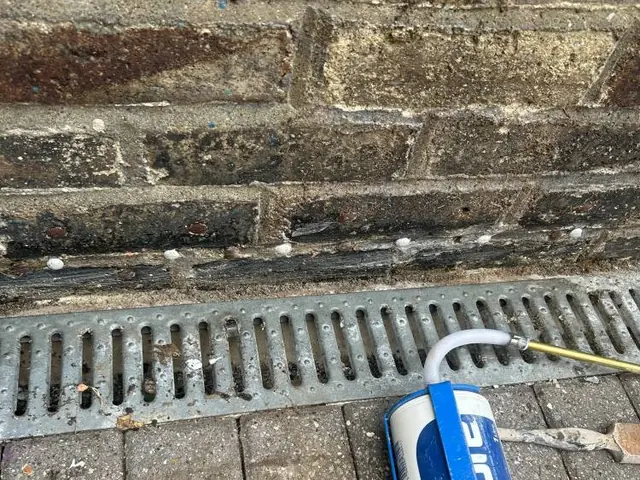
A damp proof course is a barrier in a wall just above ground level that stops water in the ground soaking up through the bricks. Many older houses have none, and in others the original slate or bitumen course has broken down, or has been bridged by a path, a flower bed or render taken down too low, so the wall above it draws up water like a wick.
The usual cure is a new chemical damp proof course. Holes are drilled along one mortar course at the bottom of the wall, a short distance apart, and a damp-proofing cream is injected into them. The cream spreads through the mortar and forms a water-repellent layer that stops the damp rising any further. The damp plaster inside is stripped and the wall re-plastered, then left to dry out.
What a new DPC involves
- Choosing the right mortar course
- Drilling holes along the course
- Injecting the damp-proofing cream
- Filling the holes
- Stripping the damp plaster inside
- Re-plastering the wall
Good to know
Damp proof membranes
Not every damp wall can be cured from inside the mortar. A wall with ground piled against the outside, a wall heavily loaded with salts after years of damp, or a stone wall with no straight mortar course to inject can stay damp even with a new damp proof course.
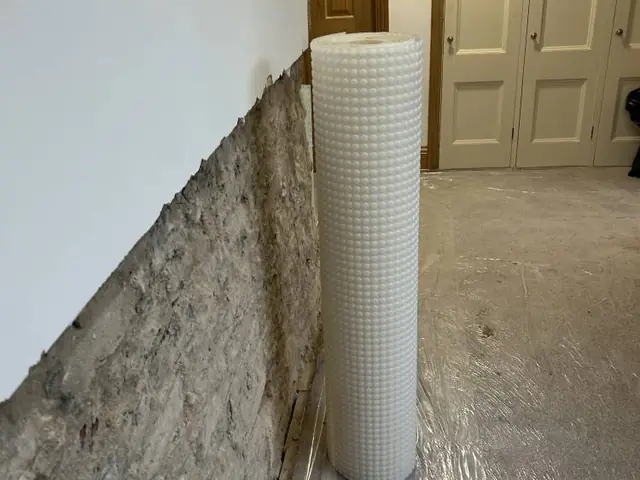
For walls like these, a damp proof membrane goes on before the plaster. The membrane is fixed to the wall and keeps the new plaster apart from the damp masonry behind it, so the finish stays dry and sound. Mesh-faced membranes take plaster straight on; others are lined with plasterboard. We will tell you which your wall needs when we come to look at it.
Membrane work
- Old plaster stripped back to the wall
- Membrane fixed to the wall
- Joints and edges sealed
- Plastered or boarded over
When a membrane is the answer
Plastering and skimming
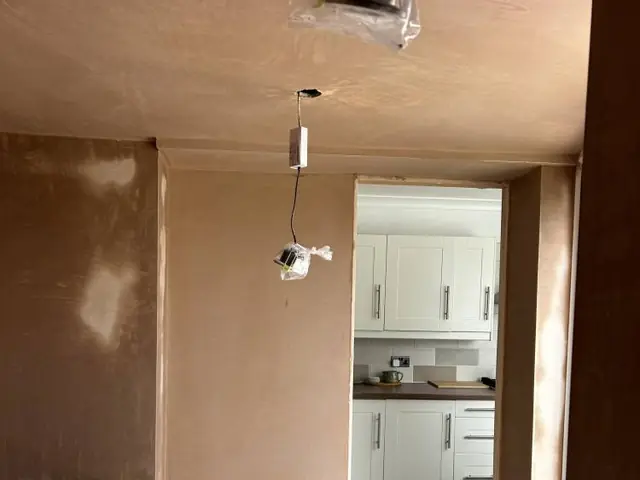
Plastering is half the name, and a big part of the work: skimming tired walls and textured ceilings, re-plastering a room back to the brick, repairing holes and cracks, and the solid plastering that goes back on after damp proofing.
A skim is a thin finishing coat over sound plaster or new plasterboard, and leaves a smooth wall ready to decorate once it has dried. Where the old plaster is loose, blown or spoilt by damp, it comes off and the wall is plastered from scratch. Coving and cornicing finish the join between the walls and the ceiling.
Plastering work we do
- Skimming walls and ceilings
- Skimming over textured ceilings
- Solid plastering and re-plastering
- Holes, cracks and ceiling repairs
- Coving and decorative cornicing
- Polished plaster finishes
- Screeding
Before the plasterer arrives
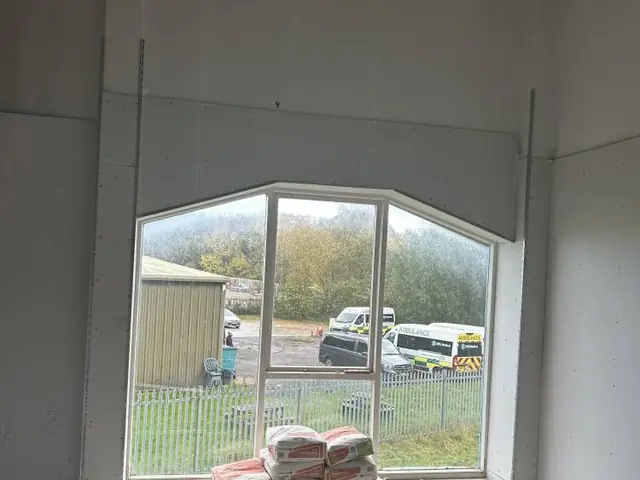
Dry lining and plasterboard
Dry lining means covering walls and ceilings with plasterboard instead of putting wet plaster straight onto the brick. The boards go up on metal studs, timber battens or dabs of adhesive, and are then skimmed for a smooth, solid finish.
It is quick and clean, and it is the usual way to finish new partition walls, loft and garage conversions, extensions, and ceilings that have come down. It is also one of the ways of finishing a wall that has been treated for damp.
Dry lining work
- Plasterboard walls and ceilings
- Boards on metal studs or battens
- Dot and dab boarding
- Boards skimmed ready to decorate
Where dry lining is used
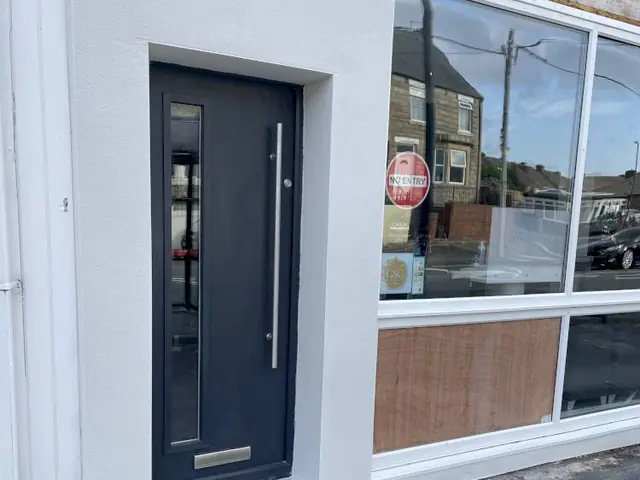
Rendering and K Rend
Render protects outside walls from the weather and can change the whole look of a house. K Rend is a through-coloured render: the colour runs all the way through, so it does not need painting, and it is made to let the wall breathe. Sand and cement render and pebble dash are the traditional finishes, and are still the right choice for plenty of houses.
A rendering job starts with the preparation: the wall cleaned down, beads fixed at the corners and round the windows, and windows, doors and paths sheeted up. The render then goes on, by hand or by machine, in coats. Old render that has cracked or come away from the wall can be hacked off and replaced, which also stops it letting damp into the wall behind.
Rendering work we do
- K Rend and coloured render
- Machine rendering
- Sand and cement render
- Pebble dashing
- Old render hacked off and replaced
- Internal rendering
Good to know before rendering
Ask for a free damp proofing quote
Say what you have noticed and where the property is, and we will get back to you to arrange a free quote.
07436 808254- pkplastering1982
@gmail.com - Photos of the damp or the job are welcome by email
- Covering Sunderland and the surrounding area